


 英語
英語 ジェームス
ジェームス スペイン語
スペイン語
×
パスワード
パスワードを取得
パスワードを入力して関連コンテンツをダウンロードします。
送信
 +86-15267462807

 言語
言語
Part 1: From Reactive Compliance to Proactive Resource Management
As we navigate the stringent environmental mandates of 2026, the global manufacturing sector is facing unprecedented pressure. With fresh water scarcity driving Zero Liquid Discharge (ZLD) initiatives and corporate ESG (Environmental, Social, and Governance) targets requiring massive carbon footprint reductions, wastewater is no longer just a liability—it is a tightly regulated resource.
To achieve these ambitious goals, facility managers must move beyond generic effluent testing. The key to unlocking true energy efficiency and process stability lies in a critical, standardized laboratory metric found in the biological heart of the treatment plant: Volatile Suspended Solids (VSS). Today, VSS is not just a regulatory checkbox; it is the foundational data point feeding the artificial intelligence algorithms that run modern, high-efficiency treatment facilities.
Part 2: The Core Science and Authoritative Standards (SM 2540 E)
Before applying advanced analytics, we must ground our understanding in verifiable, standardized science. In environmental engineering, suspended solids are categorized based on their behavior under extreme heat, a protocol rigorously defined by the globally recognized standard: Standard Methods for the Examination of Water and Wastewater (specifically, Method SM 2540 E).
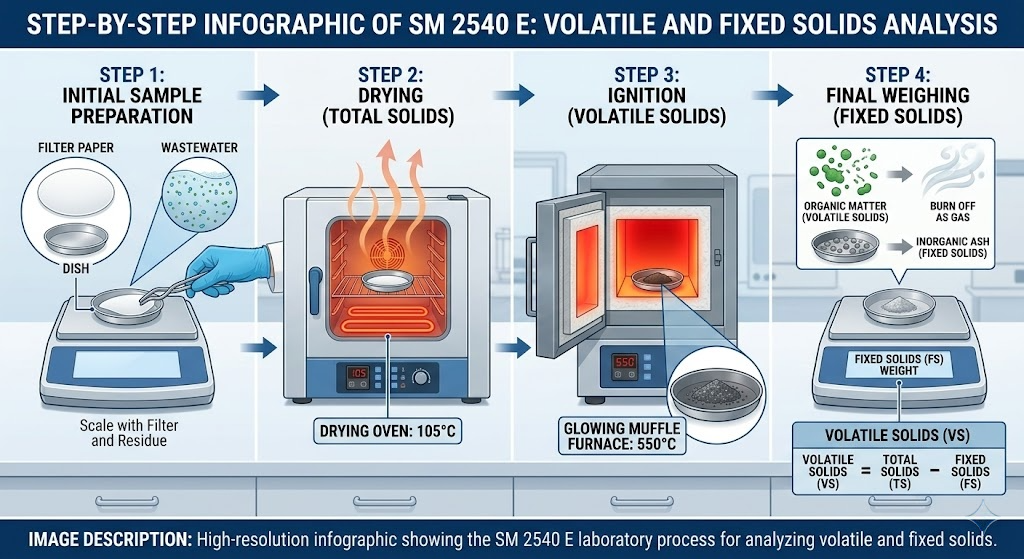
According to SM 2540 E, “Total Suspended Solids” (TSS) represents all particulate matter trapped on a glass-fiber filter and dried at 103 to 105 degrees Celsius. However, this total mass includes both active biological organisms and inert inorganic grit.
To isolate the biological fraction, certified laboratory technicians place the dried filter into a muffle furnace and ignite it at 550 +/- 50 degrees Celsius for 15 to 20 minutes. At this intense heat, all organic carbon is oxidized and volatilized into gas, while inorganic minerals remain as ash.
This gives us the fundamental, universally accepted formula:
TSS = VSS + FSS
Part 3: The Core Value — MLVSS and Digital Twin Diagnostics
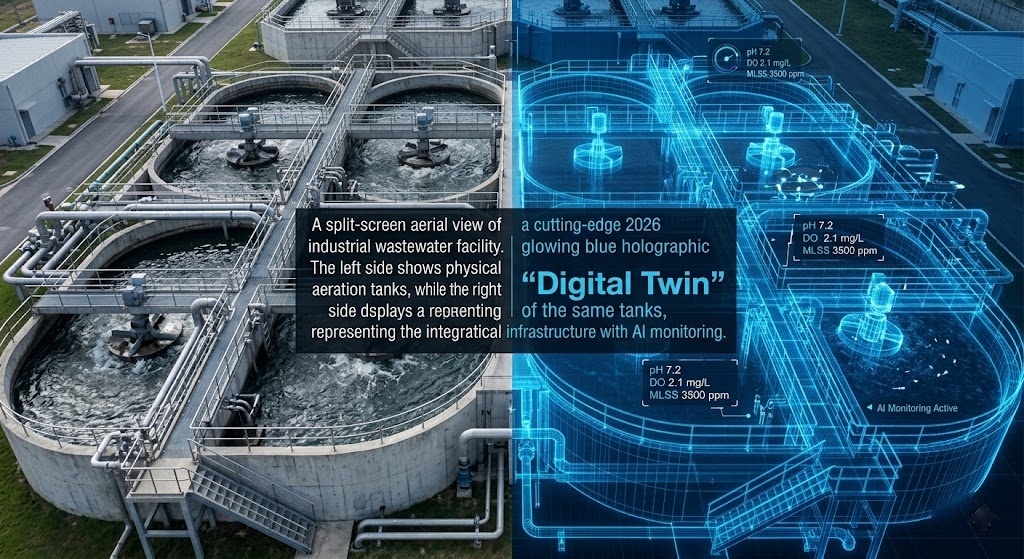
Why do certified water professionals and environmental engineers rely so heavily on this specific metric? Because in the activated sludge process, VSS is translated into MLVSS (Mixed Liquor Volatile Suspended Solids), which serves as the most accurate proxy for the concentration of active, pollutant-eating bacteria in the aeration tanks.
Part 4: Industry Application — A 2026 Brewery Case Study
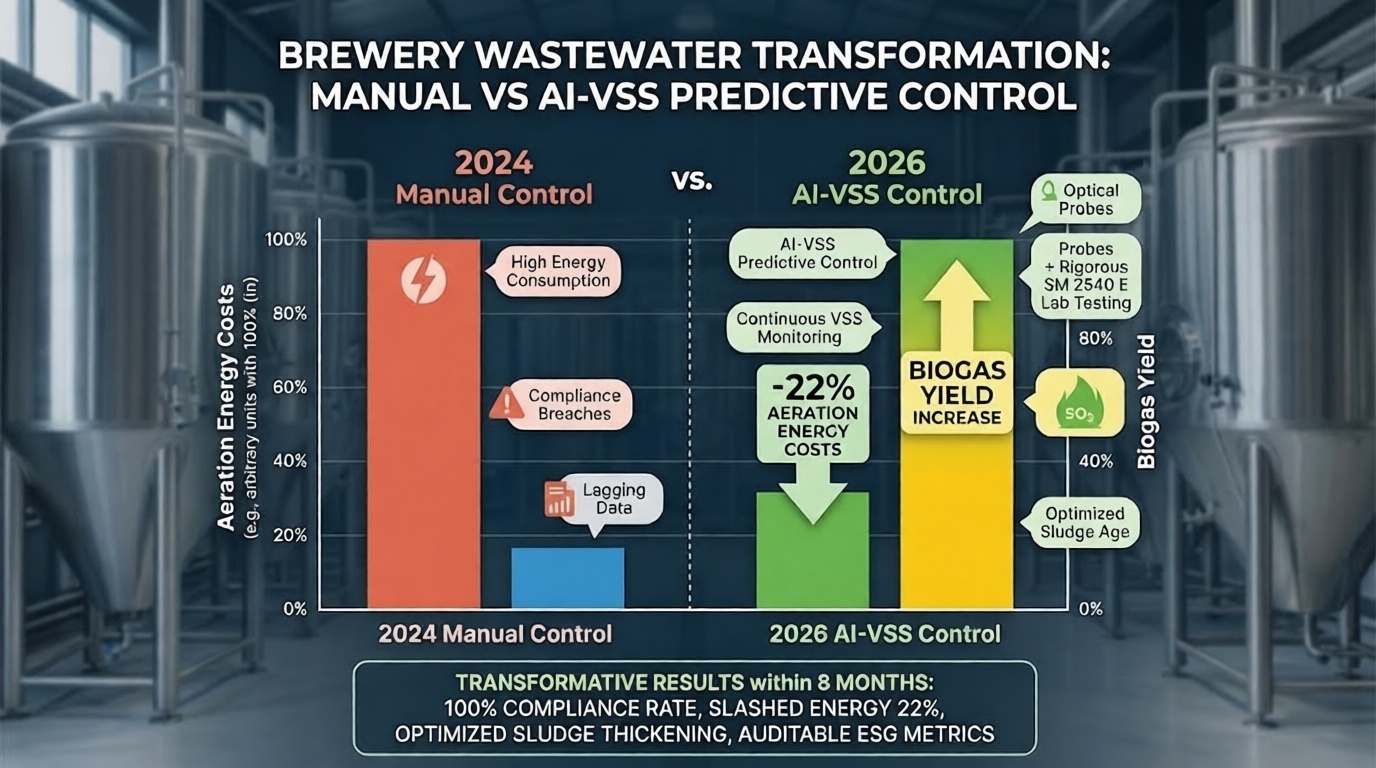
Consider the recent overhaul at a major international brewery. Food and beverage wastewater carries a massive organic load. Historically, operators managed sludge wasting and aeration manually based on visual cues and lagging laboratory data, resulting in compliance breaches and exorbitant energy bills.
To meet their 2030 net-zero targets early, the brewery implemented a predictive control system rooted in continuous VSS monitoring. By correlating optical probe data with rigorous weekly SM 2540 E laboratory testing, the plant created an accurate biological baseline.
The results were transformative: The system automatically maintained the perfect sludge age. Within eight months, the facility achieved a 100% compliance rate for effluent discharge, slashed aeration energy consumption by 22%, and optimized sludge thickening. This data-driven approach provided fully auditable ESG metrics, proving to stakeholders that the plant was operating at peak environmental efficiency.
Part 5: Future Trends — Resource Recovery and the Circular Economy
As we look toward the remainder of the decade, VSS is central to the circular economy. Sludge is no longer waste; it is a biofuel precursor. High VSS content indicates a sludge rich in organics, making it an ideal candidate for anaerobic digestion. By closely monitoring and maximizing VSS capture, modern plants accurately forecast their biogas (methane) production yields. This allows industrial facilities to generate their own renewable electricity onsite, offsetting grid reliance and massively reducing their Scope 2 carbon emissions.
Mastering Volatile Suspended Solids requires adherence to rigorous analytical standards, but the payoff is immense. By leveraging accurate VSS data, industrial operators transition from merely treating water to intelligently managing biological assets, protecting the environment, and securing the bottom line.
Q: Can we rely entirely on inline optical sensors for VSS in 2026, or is laboratory testing still required?
A: While 2026 sensor technology is highly advanced, sensors only measure light scatter or physical properties, not mass or combustibility. Therefore, to maintain E-E-A-T compliance and regulatory authority, optical sensors must be routinely calibrated against physical laboratory tests performed according to SM 2540 E.
Q: Why is the muffle furnace temperature specifically set to 550 degrees Celsius?
A: Standard Methods designates 550 +/- 50 degrees Celsius because it is the optimal thermal threshold. At this temperature, organic carbon oxidizes completely into carbon dioxide and water vapor, but it is low enough to prevent the decomposition of most inorganic mineral salts (like calcium carbonate), ensuring an accurate split between biological and mineral mass.
Q: Does VSS measure the exact number of living bacteria?
A: No, VSS is an aggregate mass measurement. It includes living active bacteria, dead bacterial cells (cell debris), and non-biodegradable organic particles caught in the sludge. However, it remains the most practical, cost-effective, and standardized proxy for active biomass available to engineers.
For environmental engineers and wastewater operators, VSS is the foundational variable for two critical biological control parameters:


86 - 571 - 88647609

+ 86-15267462807
